
Is it Peak Car?
U.S. auto sales are declining. Perhaps Motor Mania is finally over.

Please tap the {{heart}} button, which helps new readers find All Predictions Wrong.
In the United States, automobile sales – cars, light pickup trucks, SUVs – are in a trendline of decline. Ever-fewer teenagers hold drivers licenses. Total miles driven is rising because of population growth: per-capita miles driven is going down.
Donald Trump may be the final president of the United States to know how to drive stick. Before getting into politics, Trump liked to bomb around in a 1997 Lamborghini Diablo. Today Lamborghini no longer sells a manual model. Sticks are disappearing from most auto marques. If the next occupant of the Oval Office is President Alexandria Ocasio-Cortez, her Tesla doesn’t even have a transmission.
Below is All Predictions Wrong’s annual review of happenings in the car business, plus a rundown of fun quirks of new models.
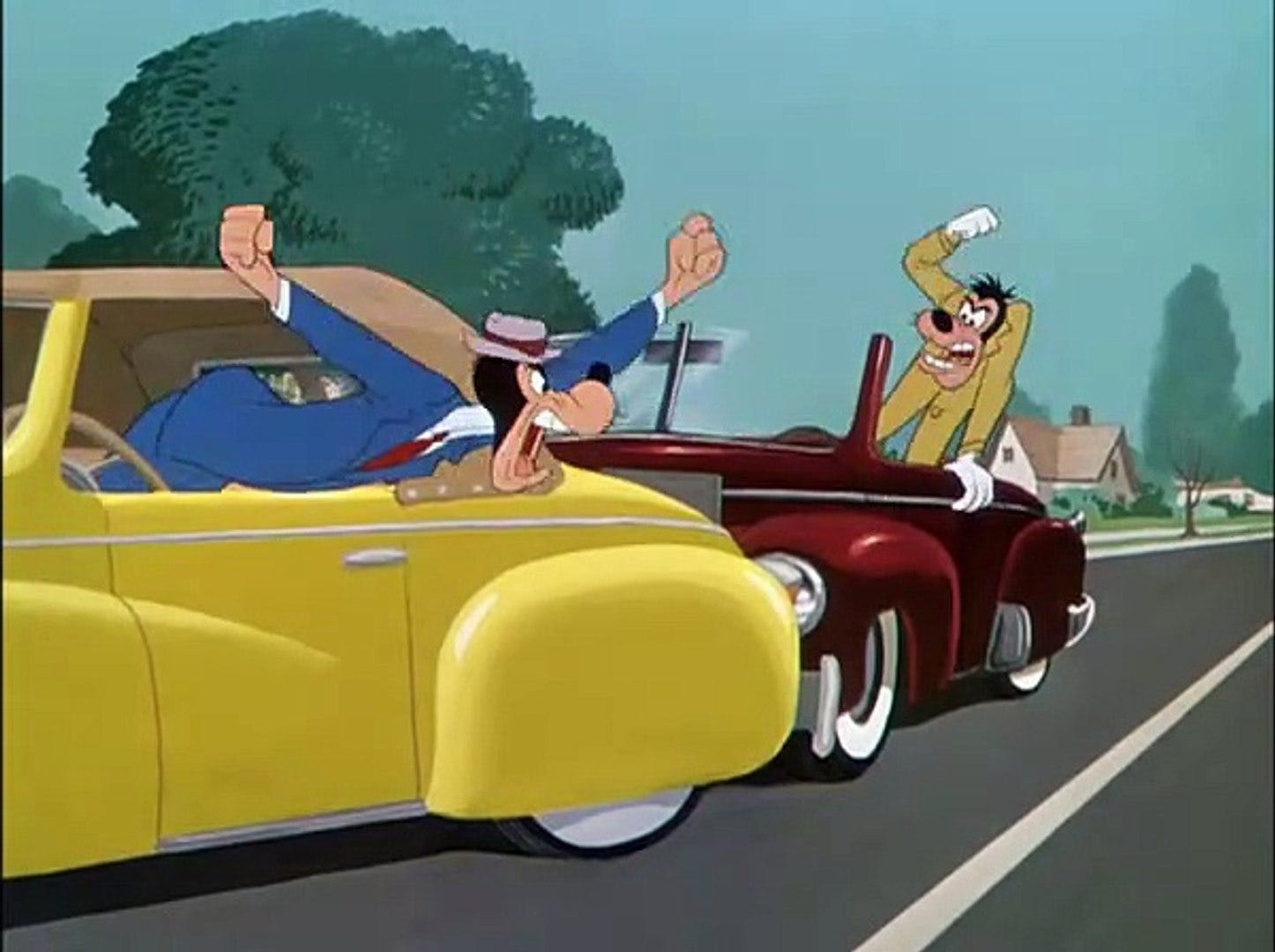
From Motor Mania, a 1950 Disney cartoon.
The leading indicator is lower sales.
After COVID lockdowns ended, U.S. domestic car sales rose for several years to about 17 million units annually. This year the selling pace is 16 million units -- one new car per 15 licensed drivers. The pace is expected to lower in 2027.
Many buyers are turned off by prices, the average new car costing $49,000. Adjusted to current dollars that’s only a little bit more than the average selling price a decade ago. But $50,000 feels like a psychological barrier that buyers don’t want to cross. The median monthly new-car payment has hit $790.
Some of the new price average reflects buyers wanting loaded SUVs and pickup trucks – heavy, low-mileage vehicles loaded with options. Manufacturers are only too happy to oblige, as their margins are higher on luxo models than on economy cars.
As recently as a decade ago, 50 percent of new cars were sedans or coupes. Now the figure is less than 20 percent, with 75 percent of the market being SUVs, pickups and crossovers. Ford has phased out most traditional cars, focusing on SUVs and big pickup trucks because that’s where the markup is.
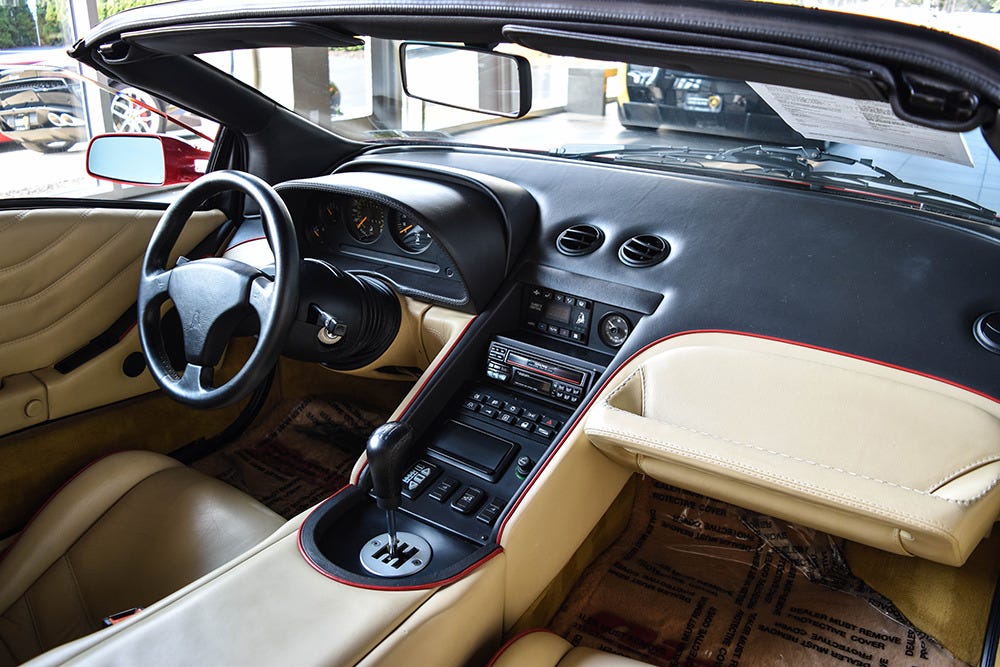
Shifter of the 1997 Diablo that Donald Trump liked to drive. Photo courtesy Lamborghini of Long Island.
Auto insurance premiums are turning buyers off new cars. Full-coverage policies now average $2,687 annually, or $225 per month, according to Bankrate. That puts the acquisition cost of a new car – buy the car, insure it – over $1,000 monthly. Then add fuel, maintenance and state taxes.
Pump prices of course are discouraging buyers, though the trend to lower new car sales predates the Iran War petroleum spikes.
A subtler factor is gradual loss of gas stations. As noted by Dan Neil of the Wall Street Journal -- whose weekly Rumble Seat column is the best regular auto commentary -- one-quarter of traditional gas stations closed over the last 15 years, pushed out by big gas pump areas at Costco, Sheetz and others. The southern mega-store chain Buc-ees (the company describes itself as “known for clean bathrooms and many fueling positions”) may per location have as many as 200 pumps for gasoline and diesel.
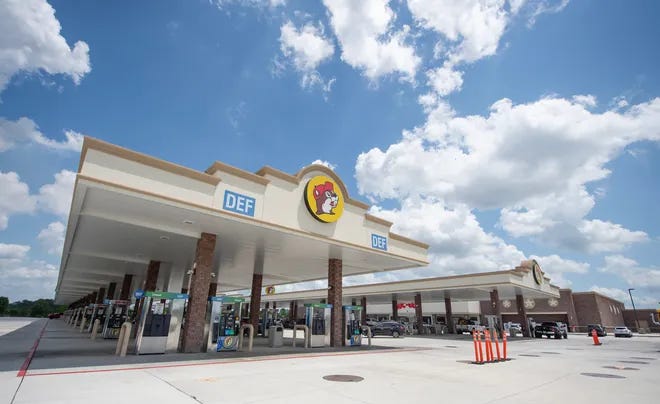
There’s plenty of gas to be had, but increasing difficulty of finding gas stations seems to convince some buyers to take ride-share services and let someone else deal with it.
Sticker shock has led to people holding cars longer, rather than trading for something new. Today the average car has been in service 13 years, highest such number ever.
There’s a nice upside to holding cars longer. This can happen because automakers steadily improved manufacturing quality and rust resistance.
For a long time a standard moment of high-pressure car sales was the “upsell” of dealer-applied rustproofing – the salesperson wouldn’t mention this until the buyer was exhausted and thought the deal was already agreed. Now vehicles leave the factory with extensive anti-corrosion treatments, including zinc-dipped metals and electrophoretic coatings. Rustproofing isn’t needed.
Because today’s cars are better-built than cars of a generation ago, they last longer than your father’s Oldsmobile. Planned obsolescence has ended. In addition to being better built, today’s cars are safer, cleaner (almost zero emissions other than greenhouse gases), have nicer sound systems and other desirable features.
Damn, should have sold some car company a paid product placement in the above paragraph.
With the typical car now 13 years old, dealers are making their margins in the repair bay not on the sales floor, and by marketing extended warranties.
